How do Interact with Nature?
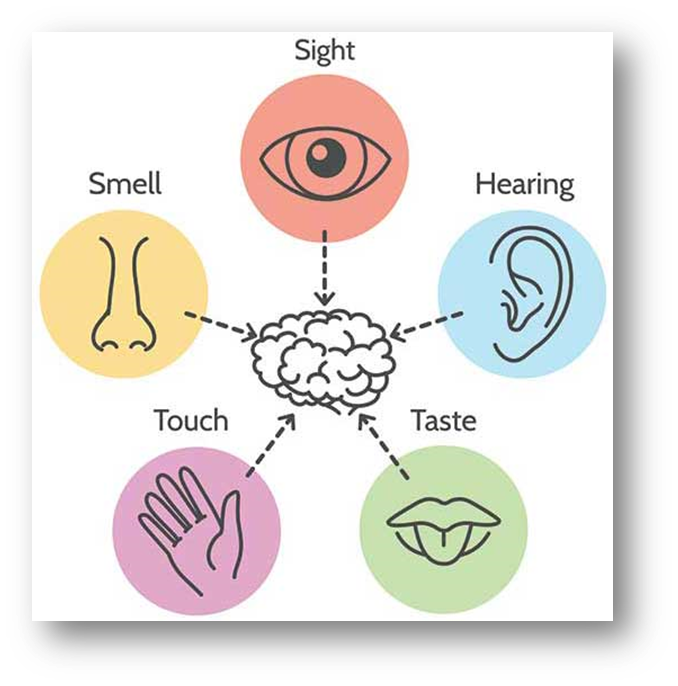
The nervous system must receive and process information about the world outside in order to react, communicate, and keep the body healthy and safe. Much of this information comes through the sensory organs: the eyes, ears, nose, tongue, and skin. Specialized cells and tissues within these organs receive raw stimuli and translate them into signals the nervous system can use. Nerves relay the signals to the brain, which interprets them as sight (vision), sound (hearing), smell (olfaction), taste (gustation), and touch (tactile perception).
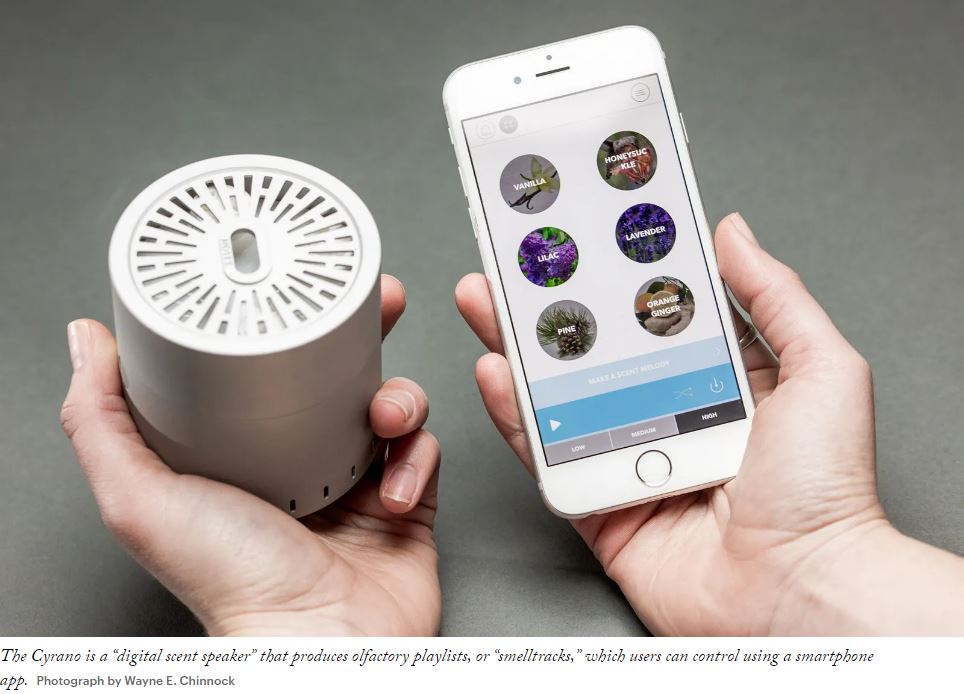
Digital Smell Technology
The sense of smell is the strongest and most primal of all our senses. It protects us from drinking milk that’s turned sour and alerts us to the presence of natural gas. It vividly reminds us of moments – good or bad – we first experienced decades ago. It is the first of our senses to evolve in the evolutionary chain and the sense with the strongest, most accurate level of recall. Scent is processed by the limbic system in our brain which is responsible for memory and emotion processes.
In marketing, scent can be highly effective in helping us distinguish one product from another. It can trigger a memory or desire that influences a purchase decision. Alternatively, scent can remind us of pleasant associations, whether that is “home”, the beach or a meadow. These associations help to create an environment in which we feel comfortable, “at home”. In a consumer setting this impacts our decision to stay longer and consume more.
Across industries, businesses are using scent as part of multi-sensory marketing strategies to enhance customers’ experiences of a location and its products or services. These experiences allow customers to develop deeper memories and emotional connections with the brand and promote sales and loyalty.
What is digital smell technology?
Consumer technology can imitate many human senses: cameras to see, microphones to hear, and touch-sensitive screens to feel, but what about scent? Imagine a world where we not only upload pictures of our latest recipes, beauty products, and coffees – but also share their smell. The opportunities for digital smell could be vast, but what are they, and what gas sensor technology will enable it? Until now, online communication involved only two of our senses, sense of sight& a sense of hearing. Soon it will involve the third, the sense of smell using a nose. Digital smell technology is the main application of e-nose. With digital scent technology, it is possible to sense, transmit & receive smell through the internet